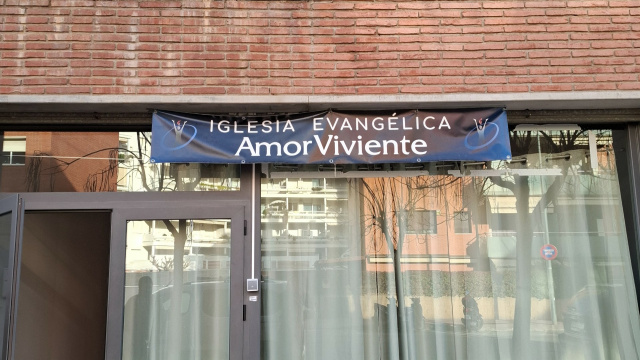
Amor Viviente Evangelical Church
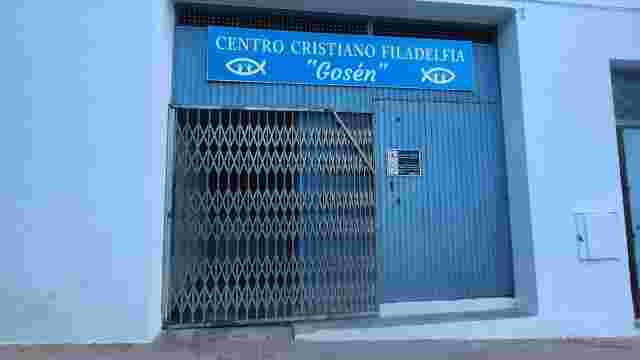
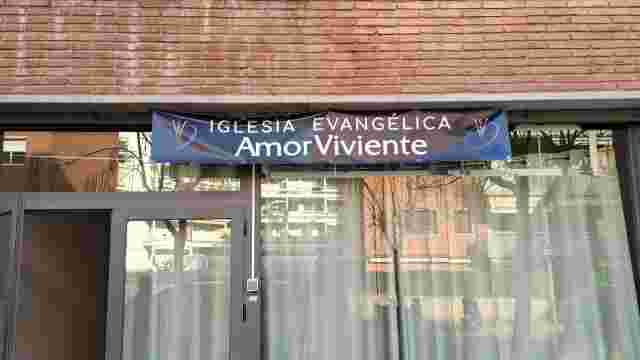
The evangelical church is present in Lloret de Mar through various Christian communities that form part of the Protestant movement. Some of these communities have been rooted in the municipality since the mid-2000s, while others have been established in more recent years, reflecting the demographic evolution and cultural diversity of the population. These communities are made up of people of different ages, backgrounds and nationalities, and have a significant presence in the municipality, particularly linked to migration processes in recent decades. The most common language in their services is Spanish, although other languages are also used, and many communities maintain an open relationship with the local social and neighbourhood environment.
Protestantism originated in Europe in the 16th century, in the context of the Reformation, a movement that arose within Christianity with the aim of returning to the roots of the biblical texts and promoting a more direct relationship between the believer and God. Figures such as Martin Luther, Ulrich Zwingli and John Calvin were key figures in this process, which gave rise to a great diversity of Protestant or evangelical churches. Over time, Protestantism has spread throughout the world and is now present on every continent. Today, after Catholicism, it is the Christian denomination with the largest number of followers globally.
Evangelical places of worship are simple, functional spaces designed for community gatherings. There are usually no religious images, and the space is arranged with chairs, musical instruments and a central area for preaching. The atmosphere is intimate and participatory, and dress is generally informal.
The use of the space is based on respect, fellowship and the active participation of those in attendance.
Regarding the concept of divinity, evangelical churches believe in one God, who manifests himself as Father, Son and Holy Spirit. Jesus Christ is recognised as the Son of God and the centre of the Christian faith, and is considered the way of salvation and reconciliation between God and humanity.
The main beliefs of the evangelical church are based on the Bible, which is considered the only sacred text and the ultimate authority on matters of faith, ethics and conduct.
Salvation is understood as a gift achieved through faith in Jesus Christ. The human being is conceived as responsible for their actions and called to live in accordance with the values of love, justice, forgiveness and solidarity. Good is expressed in a life consistent with these values and oriented towards peaceful coexistence. Many evangelical communities believe in life after death and in the hope of the Second Coming of Jesus Christ. The purpose of life is to know God, to live according to his teachings and to contribute positively to the community.
A characteristic feature of the evangelical church is the importance of community participation in worship services, which include prayer, singing, the reading and explanation of the Bible, and spiritual guidance. The evangelical communities of Lloret de Mar meet several times a week and, in addition to religious services, they run activities for welcome and mutual support and, in some cases, initiatives open to the wider community with the aim of fostering social cohesion and the well-being of individuals.