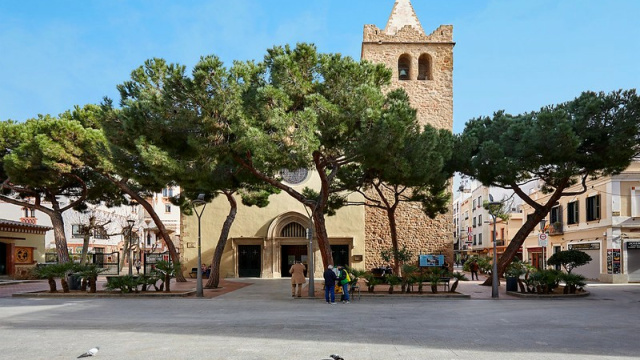
Church of Sant Romà
The Catholic community has been present in Lloret de Mar for centuries and forms part of the history and development of the municipality.
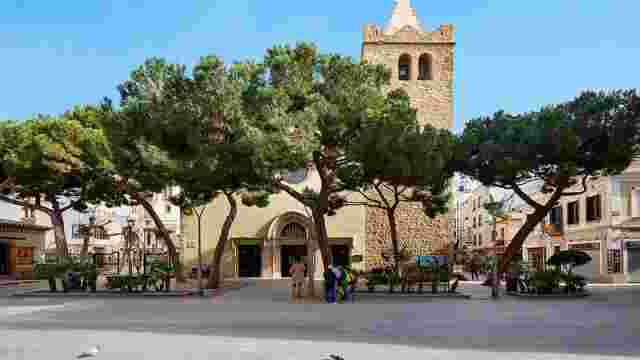
The first documented reference to the parish dates back to 1079, when the Bishop of Girona consecrated the church of Les Alegries, the first parish church in Lloret. However, there is evidence of Catholic worship as early as the 8th century on the site where the chapel of Sant Quirze now stands. The current parish church of Sant Romà, located closer to the beach, was inaugurated in 1522 and is now the main meeting place for the community. The usual language of the celebrations is Catalan, although Spanish is also used and, on occasions, other languages depending on the needs of the participants.
The parish of Sant Romà is part of the Catholic Church, a Christian community present throughout the world that recognises itself as the successor to the community of the apostles and disciples of Jesus. The origins of this religion can be found in the Middle East in the 1st century, centred on the figure of Jesus of Nazareth. According to Christian tradition, the first disciples, gathered around Mary, committed themselves to living and transmitting the message of Jesus, based on love, justice and peace, with the intention of making it present throughout time and in all cultures.
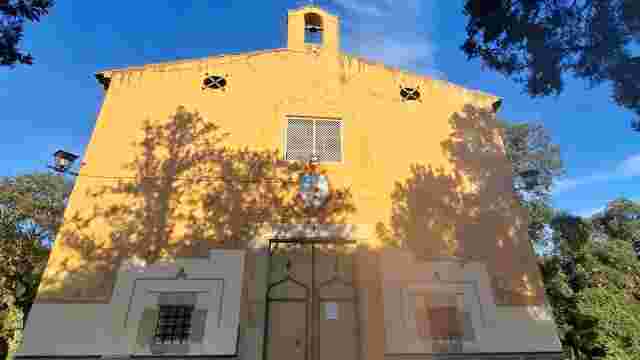
The community's place of worship is the parish church of Sant Romà, built between 1510 and 1522. It is a late Gothic building with a central nave, transept and east-facing chancel. Over the centuries, it has undergone various extensions, alterations and restorations, adapting to different historical periods. It is a space mainly used for worship and community celebrations, although it occasionally hosts cultural activities such as concerts, always respecting its sacred character.
For Catholics, God is understood as a single God, creator of all that exists, who becomes close to us through Jesus Christ, considered the Son of God and a model of life. God is experienced as a Father and as a loving presence who accompanies people throughout their lives.
The relationship with the divine is lived both on a personal and community level, especially through prayer and celebrations.
Christian beliefs are based on the dignity of every human being, considered loved by God from the first moment of their existence. Life is seen as an opportunity to grow in love, respect and responsibility towards others.
Good is identified with love, justice, forgiveness and community, while evil is linked to everything that breaks these relationships. The Christian faith includes belief in life after death and the hope of resurrection, as an expression of confidence in a full life beyond death.
From this perspective, the purpose of life is to live according to the way of Jesus and to contribute to a more just and fraternal world.
A central and distinctive element of Catholic Christianity is the celebration of the Eucharist, popularly known as Mass.
This communal celebration recalls Jesus' gesture of sharing bread and wine as a sign of love and devotion to others, and expresses a commitment to live this love in daily life. The Easter Vigil, celebrated on Easter night, is the most significant moment of the liturgical year and symbolises the passage from death to life, a fundamental principle of the Christian faith.
In addition to being a place of worship, the parish of Sant Romà carries out important social and community work. It has premises for educational activities, such as catechesis, for supporting people in need through Caritas, and for educational and leisure activities aimed at children and young people. In this way, the Catholic community of Lloret de Mar also expresses its faith through service, hospitality and commitment to community life in the town.